
Every Driver’s Worst-Case Scenario
Your heart sinks as your car suddenly loses power on a busy highway. The engine sputters, warning lights flash across your dashboard, and you realize you’re about to become stranded. Whether it’s a midnight breakdown on a dark rural road or rush-hour traffic on a major interstate, vehicle emergencies strike without warning and leave drivers feeling vulnerable and uncertain.
This comprehensive emergency car towing guide provides you with the expert knowledge and step-by-step action plan you need to handle any breakdown situation safely and efficiently. Drawing from towing professionals and roadside assistance experts, you’ll learn how to protect yourself, assess your situation, and coordinate the right help to get back on the road quickly.
The key to surviving any car breakdown is preparation and knowing exactly what to do in those critical first moments. Act fast to stay safe, but remember – you can handle this situation with the right knowledge and approach.
Immediate Safety Actions (First 5 Minutes)
Get to Safety Fast
Step 1: Execute Safe Pull-Over Procedure
The moment you notice your vehicle losing power or experiencing problems, your priority is getting to the safest possible location. On highways, signal immediately and move to the right shoulder as far from traffic as possible. Look for wide shoulders, rest areas, or exit ramps. On city streets, aim for parking lots, side streets, or areas with good visibility and minimal traffic flow.
Step 2: Activate Emergency Flashers Immediately
Turn on your hazard lights the instant you begin pulling over – don’t wait until you’re stopped. This alerts other drivers that you’re experiencing an emergency and need space. Keep these lights on throughout the entire breakdown situation.
Step 3: Position Emergency Equipment
If you have emergency triangles or flares, place them 100-200 feet behind your vehicle on highways, or 50-100 feet on regular roads. This gives approaching drivers adequate warning time to change lanes safely.
Secure Your Vehicle and Belongings
Check Your Vehicle’s Condition
Once stopped, engage your parking brake firmly and turn your steering wheel away from traffic. Quickly scan for immediate dangers like smoke, fire, or fuel leaks. If you detect any of these hazards, evacuate the area immediately and call 911.
Assess Your Position
Ensure your vehicle isn’t blocking traffic or positioned on a blind curve where other drivers can’t see you. If your current location poses additional risks, and your car is still operational, consider moving to a safer spot even if it means driving a short distance with mechanical problems.
Alert Traffic and Authorities
Know When to Call 911
Call emergency services immediately if your breakdown involves injuries, creates a serious traffic hazard, or if you detect fire, smoke, or hazardous material leaks. For standard mechanical failures on safe shoulders, roadside assistance is typically sufficient.
Contact Your Support Network
Notify a trusted family member or friend of your location and situation. Share your GPS coordinates and expected timeline for resolution. This creates a safety net if your situation deteriorates or if you need alternative transportation arrangements.
Breakdown Assessment and Documentation
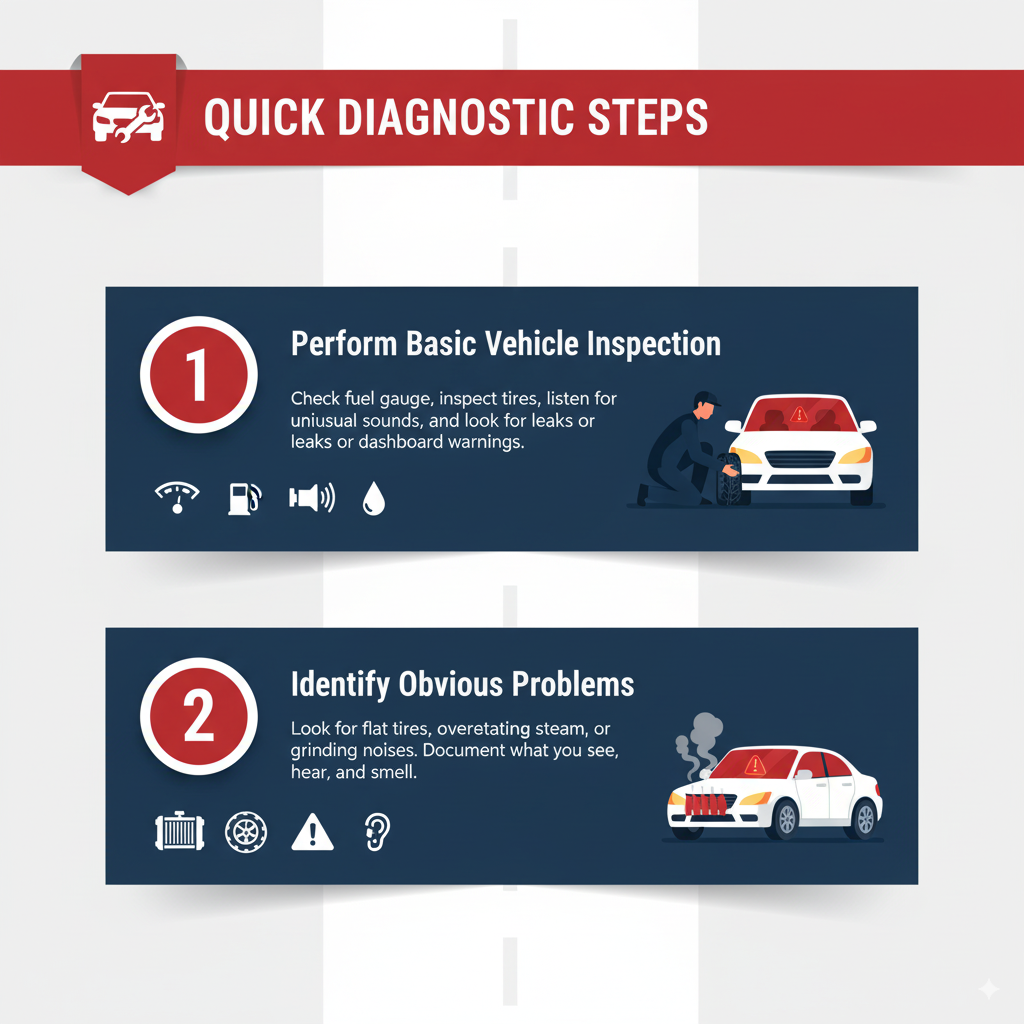
Perform Basic Vehicle Inspection
Check your fuel gauge first – running out of gas is surprisingly common during stressful situations. Examine visible tire damage, listen for unusual sounds from the engine compartment, and note any fluid leaks under your vehicle. Look at your dashboard warning lights and make note of which ones are illuminated.
Identify Obvious Problems
Common issues you can spot include flat or damaged tires, steam from the radiator indicating overheating, or grinding noises suggesting brake problems. Document what you see, hear, and smell, as this information will be crucial when communicating with roadside assistance or towing services.
Photo Documentation Process
Document Everything
Take photos of your vehicle’s position, any visible damage, dashboard warning lights, and surrounding landmarks. Capture images of mile markers, highway signs, or distinctive buildings that will help towing services locate you quickly.
Insurance Documentation
Photograph any damage that may have contributed to the breakdown, especially if another vehicle was involved or if road conditions played a role. These images will be valuable for insurance claims and can protect you from liability issues.
Communication with Roadside Assistance
Provide Clear, Accurate Information
When calling for emergency car towing, be prepared to share your exact location, vehicle make and model, nature of the problem, and whether you’re in a safe position. Mention if you have passengers, pets, or special circumstances like extreme weather conditions.
Understand Your Coverage
Know your insurance policy’s roadside assistance benefits before you need them. Some policies cover towing costs up to specific dollar amounts or distances, while others may have preferred provider networks that offer discounted services.
Common Breakdown Scenarios and Solutions
Engine Problems
Overheating Response
If your temperature gauge shows overheating or you see steam, pull over immediately and shut off the engine. Never remove the radiator cap while the engine is hot – this can cause severe burns. Allow the engine to cool for at least 30 minutes before adding coolant or water.
Electrical and Battery Issues
Dead batteries are among the most common roadside emergencies. If your engine won’t start but lights and electronics work, you may have a starter problem. If nothing electrical functions, you likely have a complete battery failure requiring either a jump-start or towing to a repair facility.
Tire and Brake Issues
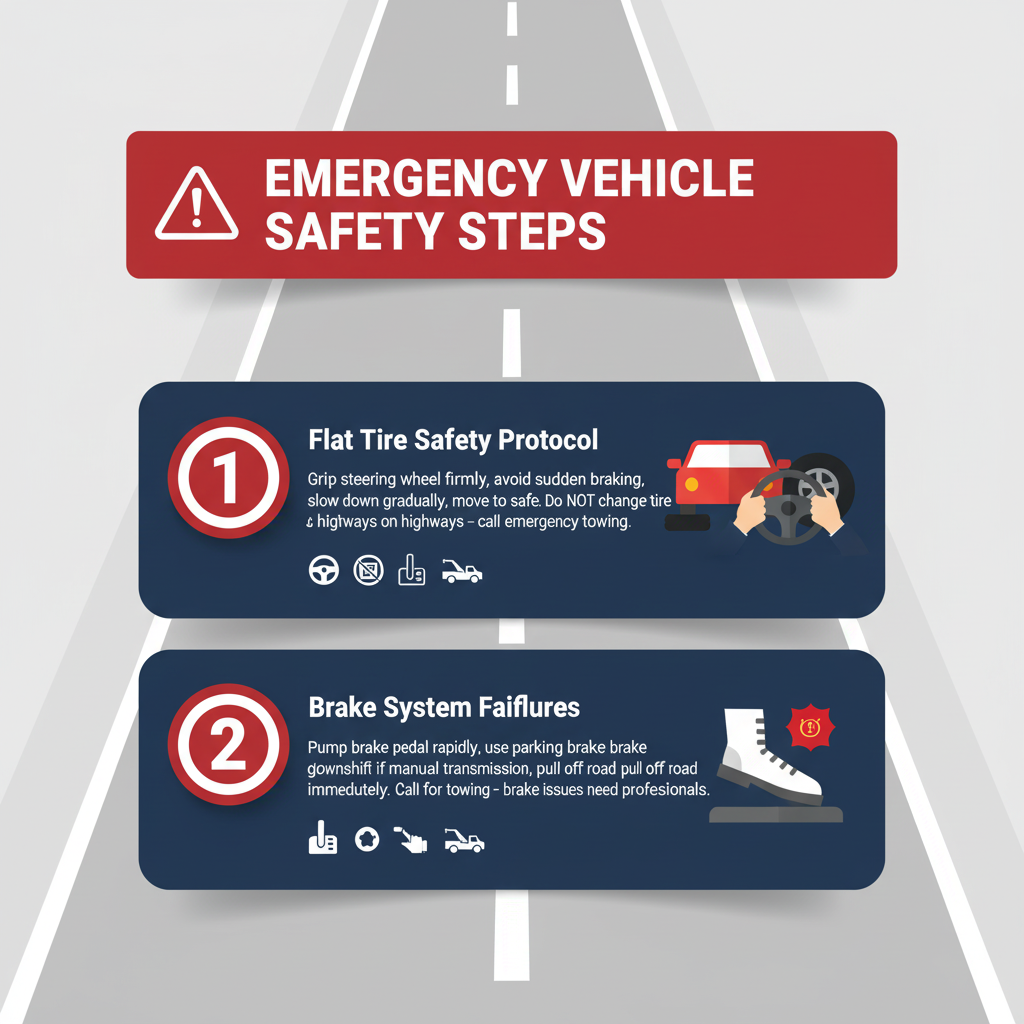
Flat Tire Safety Protocol
When you experience a tire blowout, grip the steering wheel firmly, avoid sudden braking, and gradually slow down while moving to a safe location. Don’t attempt roadside tire changes on busy highways – call for emergency car towing instead. Professional towing services have the equipment and expertise to handle tire changes safely in traffic.
Brake System Failures
If your brakes feel spongy or fail completely, pump the brake pedal rapidly to build pressure. Use your parking brake gradually to slow down, and downshift if you have a manual transmission. Get off the road immediately and call for towing – brake problems require immediate professional attention.
Transmission or Steering Issues
Transmission Problems
If your vehicle won’t shift gears or makes grinding noises during gear changes, stop driving immediately. Continuing to operate a vehicle with transmission problems can cause expensive damage and create safety hazards.
Power Steering Loss
Loss of power steering makes your vehicle difficult to control but still drivable at low speeds. If this occurs on highways, move to the shoulder immediately as steering will require significantly more effort.
Working with Roadside Assistance and Towing
Choosing the Right Towing Service
Understanding Towing Capabilities
Light-duty towing handles standard passenger vehicles, while heavy-duty services are required for trucks, RVs, or vehicles stuck in difficult positions. Most breakdowns require light-duty emergency car towing, but make sure to specify your vehicle type when calling for service.
24/7 Emergency Response
Professional towing companies like those serving the Benton Harbor area (such as services near 1303 M-139, Benton Harbor, MI 49022, United States) provide round-the-clock emergency response. Verify that your chosen service offers 24/7 availability, especially for late-night or weekend breakdowns.
Preparing for Service Arrival
Safe Positioning for Access
Ensure the tow truck can safely access your vehicle. Stay in your car if you’re on a busy highway shoulder, but be prepared to exit quickly if the driver needs you to move. Keep your driver’s license, vehicle registration, and insurance information readily available.
Securing Personal Items
Remove all valuables, personal items, and important documents from your vehicle before it’s towed. Towing companies typically aren’t responsible for items left in vehicles, and accessing your car may be difficult once it’s in their facility.
Tow vs. On-Site Repair Decision
Roadside Repair Feasibility
Simple issues like dead batteries, flat tires (in safe locations), or minor fluid leaks can often be resolved on-site. However, engine problems, transmission issues, or brake failures typically require professional shop diagnosis and repair.
Cost Considerations
While on-site repairs may seem less expensive initially, improper roadside fixes can lead to more serious problems. When in doubt, opt for professional emergency car towing to a qualified repair facility rather than risk further damage or safety issues.
Legal and Insurance Considerations
Insurance Policy Awareness
Roadside Assistance Coverage
Review your auto insurance policy to understand what roadside assistance services are included. Many policies cover emergency towing up to specific dollar amounts or distances. Some insurers have preferred provider networks that can reduce your out-of-pocket costs.
Reimbursement Procedures
Keep all receipts for towing services, roadside repairs, and related expenses. Document the circumstances that led to your breakdown, as this information may be required for insurance reimbursement or warranty claims.
State-Specific Rules
Hazard Light Requirements
Most states require the use of hazard lights during breakdowns, but specific regulations vary. Some states mandate emergency triangles or flares, while others have different requirements for rural versus highway breakdowns.
Environmental Responsibilities
If your vehicle leaks fluids during a breakdown, you may be responsible for cleanup costs. Report significant spills to local authorities and your insurance company to ensure proper handling and avoid environmental penalties.
Prevention and Preparedness
Pre-Trip Vehicle Check
Daily Vehicle Inspection
Before long trips, check tire pressure, fluid levels, battery terminals, and warning lights. Look for signs of wear like cracked belts, frayed wires, or fluid leaks. These five-minute inspections can prevent hours of roadside delays.
Recognizing Warning Signs
Learn to identify early indicators of potential problems: unusual noises, vibrations, changes in engine performance, or dashboard warning lights. Address these issues promptly rather than hoping they’ll resolve themselves.
Emergency Kit Essentials
Basic Emergency Equipment
Every vehicle should carry jumper cables, a tire pressure gauge, emergency triangles or flares, a flashlight with extra batteries, and a first aid kit. Include bottled water, non-perishable snacks, and a warm blanket for extended waits.
Communication Tools
Keep a car charger for your phone and consider a backup power bank. In remote areas, satellite communicators or CB radios can provide communication when cell service is unavailable.
Route Planning
Identifying Safe Zones
Before traveling unfamiliar routes, identify rest areas, service stations, and safe pull-off locations along your path. Know the locations of reputable towing services in areas you’ll be traveling through.
Weather and Traffic Awareness
Monitor weather forecasts and traffic conditions, especially during peak travel times. Severe weather increases breakdown risks and can complicate emergency car towing operations.
Financial and Time Impact
Managing Unexpected Costs
Budgeting for Emergencies
Set aside funds for unexpected automotive expenses, including emergency towing, repairs, and alternative transportation. Emergency car towing typically costs $75-$200 depending on distance and time of day.
Preventing Overcharging
Get cost estimates before authorizing towing services. Reputable companies provide upfront pricing and explain any additional charges for after-hours service, long-distance tows, or special equipment needs.
Minimizing Delay
Communication Strategies
Notify employers, family members, and others affected by your delay as soon as you’re safely positioned and have assessed the situation. Provide realistic timelines based on your towing service’s estimated arrival and the complexity of your vehicle’s problem.
Alternative Transportation
Research rideshare services, rental car locations, and public transportation options in your breakdown area. Having backup plans reduces stress and keeps you moving toward your destination.
Technology and Communication Tools
Mobile Apps & GPS
Towing Service Locators
Use smartphone apps to find nearby emergency car towing services, read reviews, and compare pricing. Many apps allow you to share your exact GPS location with dispatch, improving response times.
Emergency Location Sharing
Modern smartphones can share your precise location with emergency contacts even when cell service is weak. Enable location services and teach family members how to track your position during emergencies.
Communication Protocols
Effective Dispatch Communication
When calling for service, speak clearly and provide essential information first: your exact location, vehicle type, and nature of the problem. Have your GPS coordinates ready, especially on rural roads or highways without clear landmarks.
Battery Conservation
Turn off unnecessary apps and reduce screen brightness to preserve phone battery. Enable low-power mode if your wait will be extended, and avoid using your phone for entertainment while waiting for emergency car towing services.
Regional and Seasonal Considerations
Weather-Specific Challenges
Winter Breakdown Survival
Cold weather increases breakdown risks and makes waiting dangerous. Dress warmly, run your engine periodically for heat if it’s operational, and keep your exhaust pipe clear of snow. Emergency car towing services may experience delays during severe weather.
Summer Heat Precautions
High temperatures can cause engine overheating and tire blowouts. Stay hydrated, seek shade when possible, and avoid running your engine if it’s overheating. Summer breakdowns can be life-threatening in extreme heat.
Geographic Challenges
Rural vs. Urban Differences
Rural breakdowns may involve longer wait times for emergency car towing due to distance and limited service availability. Urban breakdowns often present traffic safety challenges but typically have faster response times.
Highway Regulations
Interstate highways have specific breakdown protocols and may restrict certain types of roadside repairs. Understanding these regulations can prevent citations and ensure your safety during emergency situations.
Making Smart Decisions Under Pressure
Rapid Safety Checklist
Stay or Go Decision Matrix
Evaluate your situation: Is your vehicle visible to traffic? Are you blocking travel lanes? Is weather a factor? If your position is unsafe and your vehicle is operable, moving to a better location may be worth the risk of additional mechanical damage.
Passenger and Pet Safety
Consider the safety needs of passengers, especially children, elderly individuals, or pets. Sometimes calling for multiple services or arranging separate transportation for passengers is the safest approach.
When to Wait vs. When to Act
Risk Assessment
Balance the risks of staying with your vehicle against the dangers of walking for help. Generally, staying with your vehicle is safer, but extreme weather or unsafe locations may require different strategies.
Professional Judgment
Trust the advice of experienced towing professionals. They understand local conditions, traffic patterns, and the safest approaches for your specific situation.
Conclusion & Expert Recommendations
Your Stranded Action Plan Summary
Immediate Safety Actions (0–5 Minutes) Turn on hazards, get to the safest possible location, secure your vehicle, and assess for immediate dangers like fire or leaks.
Assessment and Communication (5–15 Minutes)
Document your situation, take photos, call for appropriate help, and notify your support network of your status and location.
Long-Term Resolution (15+ Minutes) Work with professional emergency car towing services, prepare for service arrival, and make decisions about repairs versus towing based on expert recommendations.
Building Breakdown Confidence
Routine Maintenance Regular vehicle maintenance prevents most roadside emergencies. Follow manufacturer service schedules and address warning signs promptly.
Learning Basic Skills Understanding how to jump-start a battery, change a tire in safe conditions, and perform basic troubleshooting can resolve minor issues quickly.
Reliable Professional Contacts Establish relationships with trusted automotive service providers, including emergency car towing companies serving your area. Quality services, like those available near 1303 M-139, Benton Harbor, MI 49022, United States, provide the expertise and reliability you need during stressful breakdown situations.
Remember, vehicle breakdowns are stressful but manageable emergencies. With proper preparation, quick safety actions, and professional emergency car towing support, you can handle any roadside situation safely and get back to your destination with minimal disruption to your plans. Your safety is always the top priority – everything else can be repaired or replaced.