
No one leaves home expecting to be in a car accident, but collisions happen every day on Michigan roads. In the moment, it’s easy to panic or forget what to do next. As a local towing and recovery company in Paw Paw, Arndt’s Towing & Recovery has helped countless drivers after crashes—on busy highways, small town streets, and rural backroads. This step‑by‑step guide walks you through exactly what to do after a car accident so you stay safe, protect your rights, and get your vehicle moved quickly by professionals.
Step 1: Put Safety First and Move Out of Danger
The first priority after any accident is protecting yourself and others from further harm. If your vehicle is still drivable and it’s safe to do so, carefully pull off the roadway to the shoulder or a nearby parking lot and turn on your hazard lights. If your car won’t start or can’t be moved, stay inside with your seat belt on unless there is an immediate danger like fire or heavy traffic bearing down on you.
When your vehicle is disabled in a live lane, call 911 right away and then contact a professional towing company such as Arndt’s Towing & Recovery. Our team can quickly dispatch the right truck—whether you need standard car towing, truck towing, or even bus towing or limo towing—to clear the scene safely.
Step 2: Check for Injuries and Call Emergency Services
Once you’re in the safest possible position, quickly check yourself and your passengers for injuries. Even minor pain should be taken seriously. If anyone is hurt, call 911 immediately and report the accident location, number of vehicles involved, and the type of injuries.
If the crash is minor and there are no injuries, you may still need law enforcement to document the incident, especially if there is significant damage or disagreement about what happened. While you wait for responders, avoid arguing with other drivers and never admit fault at the scene. Focus on staying calm and gathering information.
Step 3: Make Your Vehicle Visible and Prevent Secondary Crashes
Secondary crashes—where another vehicle collides with an already crashed car—are common, especially at night or in bad weather. Turn on your hazard lights, and if it’s safe to exit the vehicle, place reflective triangles or flares behind your car to warn oncoming traffic.
On dark or low‑visibility roads, contacting a professional towing and roadside assistance team quickly is critical. Our crews at Arndt’s Towing & Recovery know how to position tow trucks, set up traffic safety zones, and use lighting so approaching drivers see the scene in time to slow down. For winter conditions, we often combine accident recovery with vehicle recovery when cars end up in ditches, snowbanks, or off‑road areas.
Step 4: Document the Scene and Exchange Information
Before vehicles are moved or towed away, take a few minutes to document the accident scene thoroughly. Use your phone to capture:
- Photos of all vehicles involved from multiple angles
- Close‑ups of damage to your car and any other vehicles
- Road conditions, skid marks, traffic signs, and intersections
- License plates and the general surroundings
Then exchange information with the other driver(s), including names, phone numbers, license numbers, and insurance details. If there are witnesses, politely ask for their contact information as well. After the scene is safe and information collected, you can focus on arranging towing and next steps.
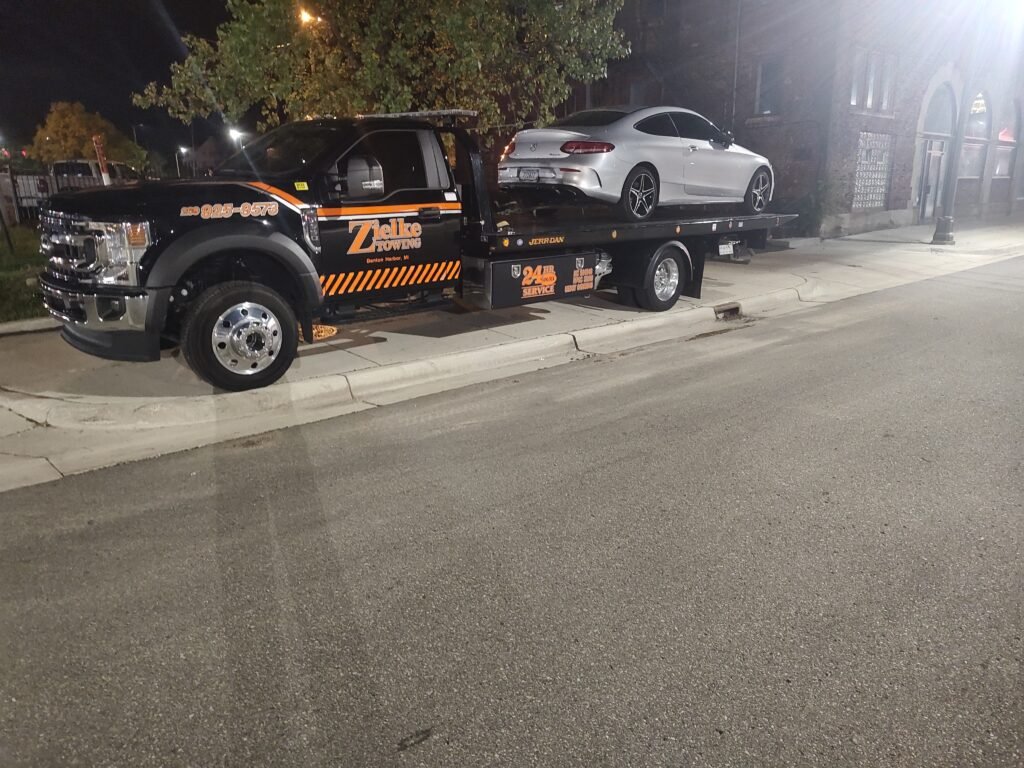
If your vehicle is not drivable or safe to operate, this is the time to call Arndt’s Towing & Recovery so we can dispatch the appropriate service—often flatbed towing for damaged vehicles or low‑clearance cars, or wheel‑lift towing for tight spots and quick clearances.
Step 5: Decide Whether Your Vehicle Is Safe to Drive
Not every accident requires an immediate tow, but many vehicles that “seem okay” at first can have hidden damage that makes driving dangerous. Before you attempt to drive away, check for:
- Fluids leaking under the car
- Tires that are flat, bulging, or pushed against body panels
- Wheels that look bent or out of alignment
- Hood that won’t latch securely
- Steering that feels loose, crooked, or pulls to one side
- Dashboard warning lights (especially for brakes, steering, or airbags)
If you see any of these signs—or if the impact was significant—play it safe and arrange professional towing instead of risking more damage or another crash. Our team can move everyday vehicles with light‑duty towing, larger work trucks with medium‑duty towing, and seriously damaged or loaded vehicles with heavy‑duty towing.
Step 6: Choose the Right Towing and Recovery Service
After an accident, not all towing is the same. The wrong towing method can cause additional damage to your vehicle’s frame, suspension, or drivetrain. When you call Arndt’s Towing & Recovery, our dispatcher will ask a few quick questions about your vehicle and damage so we can send the right truck and equipment.
- For most passenger cars and many SUVs, our car towing team uses either flatbed or wheel‑lift trucks depending on damage and driveline.
- For pickups and work trucks, our truck towing service is set up with the proper capacity and securement.
- For specialty vehicles—like limos, RVs, buses, or motorcycles—we provide dedicated limo towing, RV towing, bus towing, and motorcycle towing to keep unique vehicles safe in transit.
If your accident occurs far from home, we can also help with long‑distance towing, getting your vehicle to your preferred repair shop rather than the closest lot.
Step 7: Use Roadside Assistance When a Full Tow Isn’t Needed
Some accidents are minor fender‑benders that leave the vehicle mostly intact but in need of small fixes before it’s safe to drive. In those cases, full towing may not be necessary. Our 24/7 roadside assistance team can often resolve issues on the spot, saving you time and money.
After a collision, you may need:
- A jump start if your battery was drained by hazard lights or cold weather – handled by our dedicated battery services team.
- A spare tire installed if a tire was cut or damaged – taken care of through our tire replacement services.
- Help if your vehicle slid off the road into a ditch or snowbank – our vehicle recovery crew can winch you back onto solid ground.
Let our dispatcher know exactly what happened, and we’ll recommend either towing or roadside service based on safety and cost‑effectiveness.
Step 8: Decide Where Your Vehicle Should Go
Once your vehicle is hooked up and ready to move, you’ll need to decide where you want it taken. This is an important choice that affects your repair options and insurance claim.
Common destinations include:
- Your trusted local repair shop or dealership
- A collision center recommended by your insurer
- Your home or storage location, especially if you’re still deciding on repairs
As a local towing company, we regularly deliver vehicles to shops throughout Paw Paw and Van Buren County. If you’re unsure where to send the vehicle, our team can share local options while you consider what works best for you. If you may not repair the vehicle immediately, you can ask about options that pair initial recovery with later long‑distance transport once you finalize a plan.
Step 9: Notify Your Insurance Company and Understand Coverage
After leaving the scene safely and arranging towing, contact your insurance company as soon as possible to report the claim. Provide them with:
- Date, time, and location of the accident
- Photos and videos you took at the scene
- Police report details if law enforcement responded
- Details about any injuries, even minor ones
Many policies cover a portion of accident‑related towing when you use a professional service like Arndt’s Towing & Recovery. If your insurance includes roadside assistance, it may reimburse all or part of the tow, winch‑out, or emergency services. Keep your towing invoice from our team and any repair estimates—your insurer will likely request copies.
Step 10: Take Care of Yourself After the Crash
Accidents are stressful physically and emotionally. Even if you feel fine immediately after the collision, pay attention to how you feel in the hours and days that follow. Many injuries—including whiplash, muscle strains, and some head injuries—show symptoms later. Consider seeing a medical professional for an evaluation, especially after moderate or severe impacts.
Emotionally, it’s normal to feel shaken. Talk with family, friends, or professionals if you feel anxious about driving again. Knowing you have reliable support from a local towing partner can make it easier to get back behind the wheel with confidence.
How Arndt’s Towing & Recovery Helps After an Accident
As a local Paw Paw towing company, Arndt’s Towing & Recovery is built around helping neighbors during some of their most stressful moments. Our 24/7 services include:
- Fast, damage‑free car towing anywhere in Paw Paw and Van Buren County
- Flatbed towing for damaged, luxury, or all‑wheel‑drive vehicles
- Accident and off‑road recovery for vehicles in ditches, fields, or snow
- Complete roadside assistance for batteries, tires, lockouts, and more
- Specialty RV, limo, bus, and motorcycle towing
- Short‑ and long‑distance towing to your chosen repair shop
You can explore the full range of what we offer on our services page, or learn more about who we are and how we operate on our about us page.
Your Local Accident Support Partner in Paw Paw
A car accident can turn your day—and sometimes your life—upside down. But you don’t have to handle everything alone. With the right steps and support from a trusted local towing company, you can move from panic to a clear, controlled plan.
If you’ve just been in an accident in or around Paw Paw:
- Make the scene safe
- Check for injuries and call 911 if needed
- Document what happened
- Call Arndt’s Towing & Recovery to move or recover your vehicle
We’ll help you handle the towing and roadside side of the situation so you can focus on your health, your family, and the next steps with your insurance and repair shop.
Contact Arndt’s Towing & Recovery
Phone: +1 269-655-4123
Address: 43910 30th St LOT 12, Paw Paw, MI 49079, United States
Website: https://arndtstowingandrecovery.com/
Services: https://arndtstowingandrecovery.com/services/
Contact page: https://arndtstowingandrecovery.com/contact-us/
For more practical towing and safety tips, visit our blog and check out our other articles on winter driving, roadside preparedness, and choosing the right towing method for your vehicle.