
Picture this: it’s a gray February morning, the temperature overnight dropped to 14°F, and you’re driving south on M-40 toward Lawrence when a patch of black ice catches you completely off guard. In a split second your vehicle slides off the shoulder and drops into a snow-packed ditch — wheels spinning, no traction, no way out on your own. Or maybe it’s mud season in late March, and a soft shoulder on County Road 681 near Bloomingdale swallowed your rear tires while you were pulling over to take a call.
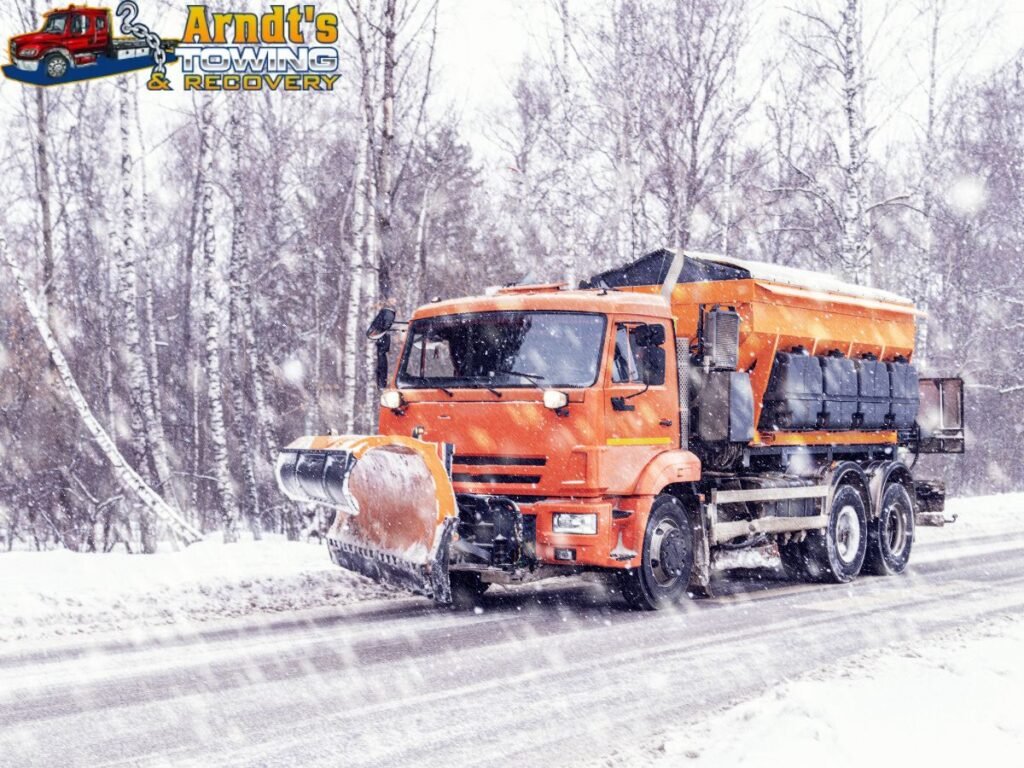
These scenarios happen every single week across Van Buren County — and when they happen to you, the last thing you need is to spend an hour on hold with a national dispatch service. Arndt’s Towing And Recovery provides 24-hour winch-out and vehicle recovery service throughout Paw Paw, MI 49079 and all of Van Buren County. One call gets a locally equipped, locally knowledgeable recovery team moving toward you: (269) 655-4123.
What Is a Winch-Out? Understanding Vehicle Recovery in Van Buren County
Winch-Out vs. Full Vehicle Recovery — Know the Difference
These two terms are often used interchangeably, but they describe different levels of service — and knowing the difference helps you communicate clearly when you call for help.
Winch-Out Service
A winch-out uses a motorized steel cable — anchored to the tow truck’s frame and attached to a safe recovery point on your vehicle — to pull your car, truck, or SUV back onto the roadway. This is the appropriate solution when:
- Your vehicle has slid off the road into a roadside ditch
- Your tires are stuck in mud, sand, or soft gravel shoulder
- You are high-centered on a snow bank or embankment
- Your vehicle is otherwise undamaged and drivable once extracted
In many winch-out scenarios, once the vehicle is back on the road, you can drive away with no tow needed. Our team always assesses your vehicle’s condition after extraction before clearing you to drive. For more on what situations require a tow vs. on-site help, read our guide on when to call a tow truck.
Full Vehicle Recovery
Full vehicle recovery is a more involved operation. It applies when:
- Your vehicle has rolled over and must be uprighted and stabilized before towing
- The vehicle is deeply embedded in soft terrain — mud, water, a creek bank, or dense brush — and requires multiple anchor points and specialized rigging
- The vehicle was involved in a serious accident and is structurally compromised
- The recovery site has limited access — a narrow county road, steep embankment, or a location requiring a long cable run
For complex recoveries, Arndt’s deploys our heavy-duty recovery equipment and follows proper rigging protocols to protect both your vehicle and our operators. Learn more about our full vehicle recovery service.
Why Vehicle Extractions Are So Common in Van Buren County
Southwest Michigan’s Road Conditions Create a Year-Round Recovery Season
Most drivers think of ditch incidents as a winter-only problem — but in Van Buren County, the terrain and seasonal hazards create a year-round vehicle recovery season. Here is a breakdown of the most common conditions our recovery team encounters throughout the year.
Winter: Black Ice and Lake-Effect Snow (October – April)
Southwest Michigan is positioned in the heart of Lake Michigan’s snow belt. When cold northwest winds sweep across the lake, they pick up moisture and deposit heavy snowfall — often with little warning — on Van Buren County roads, I-94, M-40, and rural county routes. The National Weather Service — Grand Rapids office issues frequent lake-effect snow and winter storm warnings for Van Buren County from October through April.
The most dangerous conditions occur just after a snowfall when roads appear clear but a thin layer of compacted ice (black ice) forms on the pavement surface — invisible, frictionless, and responsible for the majority of winter ditch incidents in our service area. For full winter driving and towing guidance, read our post on winter towing tips for Michigan roads.
High-Risk Winter Roads in Van Buren County:
- M-40 between Paw Paw and Lawrence — open, flat terrain with no wind break; freezes fast
- County Road 681 near Bloomingdale — wooded corridor; shaded ice persists past mid-morning
- Red Arrow Highway (M-43) between Mattawan and Paw Paw — bridge deck freezes before road surface
- County Road 215 near Hartford — exposed two-lane with farm field runoff that freezes across the road
- I-94 westbound between Exit 56 and Exit 60 — unshielded flat terrain; wind-blown snow reduces visibility rapidly
Spring: Mud Season and Soft Shoulders (March – May)
Michigan’s spring thaw brings weeks of saturated soil, flooded county roads, and dramatically softened road shoulders. On rural Van Buren County roads, simply pulling off to the shoulder to check a map or answer a call can result in your tires sinking into soft ground. County Road 388 near Bloomingdale, M-51 near Decatur, and the back roads around Bangor and Covert Township are especially prone to spring shoulder failures.
The Van Buren County Road Commission issues seasonal weight restriction orders each spring on rural county roads to reduce surface damage — but soft shoulders remain a hazard well into May regardless of posted restrictions.
Summer: Off-Road and Recreational Incidents (June – September)
Summer brings a surge in recreational activity across Van Buren County — ATVs, trail bikes, camper trailers, and boats towed on unfamiliar rural roads. Off-road recovery calls spike significantly between June and September near Kal-Haven Trail State Park, Maple Lake, Paw Paw Lake, and the recreational areas surrounding South Haven (49090). Our team handles RV towing and off-road vehicle extractions for all recreational vehicle types.
Fall: Deer Collisions and Wet Leaf Cover (October – December)
October through December is peak deer-vehicle collision season in Michigan. According to the Michigan Department of Natural Resources (DNR), Van Buren County ranks among Michigan’s counties with the highest deer-vehicle incidents annually — particularly on wooded rural corridors including M-40 south of Lawrence, County Road 653 near Decatur, and Territorial Road near Bangor. A deer strike at speed can push a vehicle off the road entirely, requiring both accident scene towing and recovery services. Read our detailed guide on what to do after a car accident in Paw Paw, MI for a full post-accident action plan.
Wet autumn leaves compound the hazard — a road surface coated with decomposing leaves becomes nearly as slippery as ice and increases the risk of losing control on curves.
Why DIY Vehicle Extraction Is Dangerous — And Illegal in Some Cases
The Real Risks of Pulling Your Own Car Out
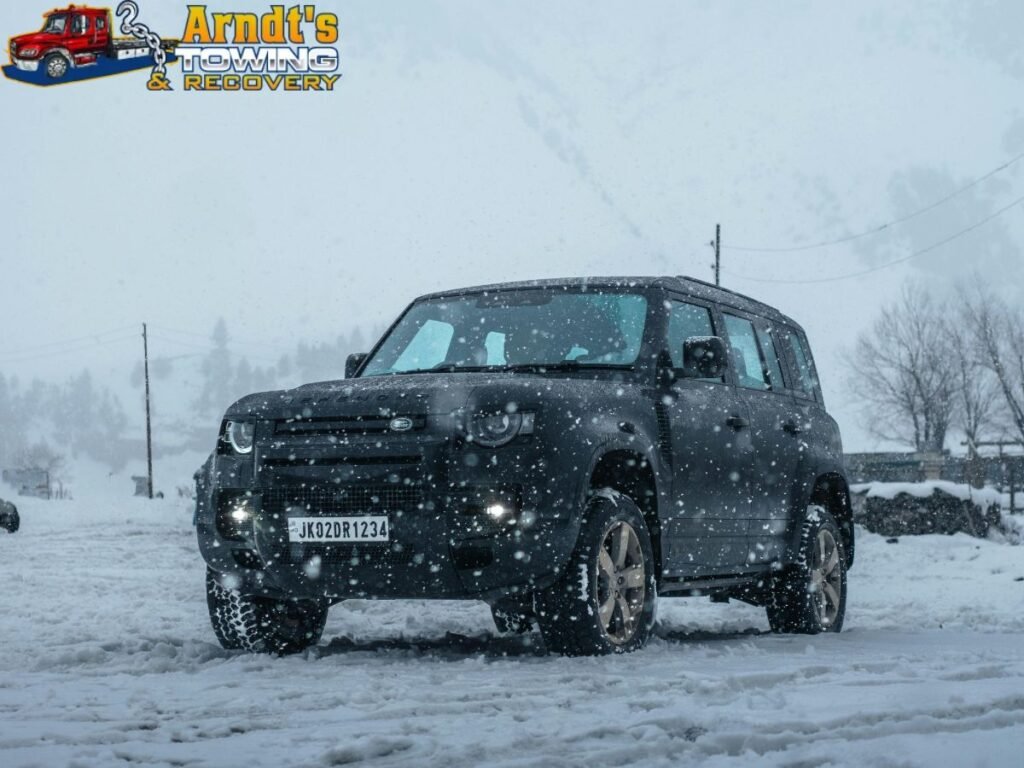
When a vehicle ends up in a ditch, it’s tempting to flag down another driver and ask them to use a tow strap to pull you out. It feels simple. It rarely is. Here is why professional winch-out service is always the right call:
Risk 1 — Frame and Drivetrain Damage
Improper rigging — attaching a tow strap to a bumper cover, trailer hitch, or suspension component not rated for extraction force — can cause severe frame distortion, radiator damage, and drivetrain failure that far exceeds the cost of a professional winch-out. Read our article on whether professional towing damages cars for a full breakdown of the differences between professional and amateur recovery methods.
Risk 2 — Secondary Accidents on Active Roadways
A DIY extraction attempt on the shoulder of M-40, Red Arrow Highway, or I-94 creates a secondary traffic hazard. Vehicles stopping in travel lanes or on narrow shoulders — especially at night or in poor visibility — dramatically increase the risk of a collision. Michigan law under MCL 257.618 requires all parties to move off active roadways as quickly as safely possible. A professional recovery operator knows how to work the scene safely and efficiently.
Risk 3 — Physical Injury
Tow straps and winch cables under tension store enormous energy. A failed connection or snapped strap can recoil at lethal speed. Professional recovery operators use rated shackles, proper anchor points, and rigging equipment specifically designed for vehicle extraction forces — along with proper positioning to stay out of the snap-back zone.
How Arndt’s Winch-Out and Recovery Process Works
Step 1 — Call (269) 655-4123 and Stay Safe
As soon as your vehicle leaves the road, call Arndt’s at (269) 655-4123. Turn on your hazard lights immediately. If you are on or near an active roadway, exit your vehicle through the passenger-side door (away from traffic) and move to a safe distance from the road. Never stand behind your vehicle on a highway shoulder.
Tell our dispatcher your exact location — road name, direction, nearest cross street, mile marker, or a nearby landmark. Not sure what information you need to give when calling for towing? Our team will walk you through it.
Step 2 — Scene Assessment on Arrival
Our certified recovery operator arrives and assesses the full situation before touching the vehicle. This includes:
- Checking vehicle angle, depth in the ditch, and soil or surface conditions
- Identifying proper recovery attachment points (frame hooks, factory tow eyes, or chassis points — never bumpers or suspension arms)
- Determining cable length, anchor position, and the safest direction of pull
- Checking for fuel, fluid, or structural damage that would affect safe extraction
Step 3 — Rigging and Controlled Extraction
Our operator rigs the winch using rated recovery straps and shackles, positions the tow truck at the correct angle, and executes a slow, controlled pull that brings the vehicle smoothly back onto the road surface without jerking, snapping, or causing secondary damage. For deeply embedded vehicles or rollover recoveries, a multi-point rigging setup is used with a secondary stabilization line.
Step 4 — Post-Extraction Vehicle Check
Once your vehicle is back on the road, our operator performs a visual inspection for obvious damage — fluid leaks, tire condition, steering response — before clearing you to drive. If damage is found that makes the vehicle unsafe to drive, we will recommend a flatbed tow or wheel-lift tow to your preferred repair shop in Paw Paw, Mattawan, or Kalamazoo. Our guide to preparing your car for towing explains what to expect during that process.
Winch-Out Service for All Vehicle Types in Van Buren County
Arndt’s recovery equipment is rated and deployed for all vehicle classes — not just standard passenger cars. Our winch-out and recovery service covers:
- Passenger cars and SUVs — the most common ditch extraction request
- Pickup trucks and vans — including lifted 4×4 trucks that have over-estimated road shoulder stability
- Motorcycles — gentle extraction from gravel or grass off-road situations; see our full motorcycle towing guide
- Commercial trucks and semi-trailers — requires heavy-duty recovery equipment and certified large-vehicle rigging
- RVs and motorhomes — high center-of-gravity vehicles that require extra care during extraction; see our RV towing service
- Farm equipment and tractors — common in rural Van Buren County agricultural areas near Lawrence, Decatur, and Bangor
For questions about maximum towing and recovery weight capacities, our team can advise you before dispatch on the right equipment for your vehicle.
Frequently Asked Questions — Winch-Out & Recovery Near Paw Paw, MI
Will my insurance cover a winch-out in Michigan?
Many comprehensive auto insurance policies and roadside assistance add-ons include coverage for winch-out and vehicle extraction services. Review your policy or call your insurance provider. Arndt’s can provide a detailed service receipt for any insurance claim. For towing cost context, read our car towing cost guide for Van Buren County.
How long does a winch-out take near Paw Paw?
A straightforward single-axle ditch pull on a rural Van Buren County road typically takes 15 to 30 minutes from the time our truck arrives — faster for simple extractions, longer for complex or deeply embedded situations. For overall response time information, read our post on how long it takes a tow truck to arrive.
What if my vehicle is stuck in a creek or water?
Water recovery requires special equipment and safety protocols. Call Arndt’s at (269) 655-4123 immediately and give us your exact location. Do not attempt to restart a vehicle that has been submerged or flooded — hydro-lock will cause catastrophic engine damage. Our vehicle recovery team will advise on next steps upon arrival.
Can Arndt’s recover a rolled-over vehicle in Van Buren County?
Yes. Arndt’s Towing And Recovery handles rollover stabilization and recovery using heavy-duty rigging equipment. After a rollover, the vehicle will require a flatbed tow to a repair facility. Read our full emergency car towing guide for stranded drivers for post-accident protocol.
Does Arndt’s offer winch-out for motorcycles in Paw Paw, MI?
Yes — with extra care. Motorcycles require a very different extraction approach than four-wheeled vehicles. Our motorcycle towing and recovery team handles off-road motorcycle situations with soft-rigging equipment designed to avoid frame and bodywork damage.
Stuck Anywhere in Van Buren County — Arndt’s Gets You Out
Whether you’ve slid off M-40 in a January ice storm, sunk into a spring mud shoulder near Bloomingdale on County Road 388, high-centered your camper on a rural access road near South Haven (49090), or rolled into a ditch on County Road 681 near Decatur at 3 AM — Arndt’s Towing And Recovery has the equipment, the training, and the local terrain knowledge to get you out safely.
24 hours. 7 days. 365 days. No exceptions.
📍 Arndt’s Towing And Recovery 43910 30th St, LOT 12, Paw Paw, MI 49079 📞 (269) 655-4123 🌐 arndtstowingandrecovery.com ⏰ Open 24 Hours — 7 Days a Week 🗺️ Find Us on Google Maps
Browse all towing and recovery services, explore tips on the Arndt’s Towing blog, or learn more about our locally rooted team serving Van Buren County, Michigan.
Arndt’s Towing And Recovery provides winch-out and vehicle recovery throughout Van Buren County, Michigan — including Paw Paw (49079), Mattawan (49071), Lawrence (49064), Lawton (49065), Decatur (49045), Bloomingdale (49026), Gobles (49055), Hartford (49057), Bangor (49013), South Haven (49090), and all surrounding rural townships in Southwest Michigan.